Thursday, October 11, 2012

Hormones Affecting Behavior

Hormones can affect behavior in lots of different ways. In sports, different levels of hormones can determine how well people perform! This is an interesting article that I saw the other day about how to structure your day based around hormone levels

http://www.wired.com/wiredscience/2012/10/mf-do-the-right-things-at-the-right-time/

I think hormones underscore the importance of keeping a regular circadian rhythm. I know lots of college students that spend time not sleeping for one night and generally having stupid circadian rhythms. They also seem to do worse in school than people who do keep a regular circadian rhythm.

Also an easy example of how hormones affect behavior is PMS. Hormone levels make women CRAZY neurotic!


Just kidding!

Thursday, October 4, 2012

How do I define emotion?


I believe in the 6-emotion theory thingy! There's happiness, sadness, fear, disgust, anger, and surprise! I think these emotions, well, I FEEL that these emotions are made up of two elements. Arousal level and positive/negative affect! I feel that I stole this idea from a psychological theory a while ago that at first I was very skeptical of but then it gradually seemed to make sense. Maybe. I still have my doubts!

On a neuroscientific level, I think emotions are from the reptilian brain! Emotion is kind of what drives us - helps us reproduce and increase our fitness a lot. Animals probably have emotions because emotions enable proactive activity that can increase fitness. Emotions can suck at times -but there was this one game I played where they took the emotion away from failed wizards and it was really creepy how emotionless humans acted! So while this is definitely not scientific, it made me think that emotions are pretty necessary! 


Tuesday, September 25, 2012

Most AMAZING fMRI Study!

The most interesting fMRI studying I’ve stumbled upon has to do with the idea of free will. While originally a famous EEG study, in recent years it has been ‘replicated’ in fMRI studies. Basically the essence of the study is something like researchers can detect what your arbitrary “A or B” choice is going to before you consciously make that decision. This has wide ranging impacts in the field of philosophy and the debates over free will. If when we think we “consciously make” a decision, is actually caused by our subconscious brain that we don’t have conscious control over, then that’s a powerful argument against free will.

Personally I am a bit skeptical about these experiments. Sure they MIGHT work for simple decisions, but this probably isn’t the case for more complex decisions that aren’t arbitrary and silly. And I’m pretty convinced that there technically is no free will and that we live in a deterministic universe, but in every day life it seems self-evident that we do have free will!

Elizabeth Tricomi's Presentation on Rewards/Punishment

I thought Professor Tricomi's presentation was very interesting! She detailed experiments in a social psychological-fashion and then for every experiment - fMRI! If all social psychology experiments also added an fMRI I am sure that there would be many interesting findings.

When talking about reward, I thought of a system that would reward us very well. Have a piping system throughout the Duke dorms that go into every room. Then there would install a simple little electronic thing and then we could select what snack we want and it would fall down through the sanitary pipe into our hands! For example we could select 'grape' or 'M&M', like her experiment was about. I would eat so much more fruits! Carrot, grape, cucumber munching could probably sustain me to only having to eat one meaty meal a day.


This lecture really illustrated the power of combining social psychology and fMRI. Along with interesting social psych results, there are also neuro underpinnings revealed within the same study!


Tuesday, September 18, 2012

Mind-reading machine

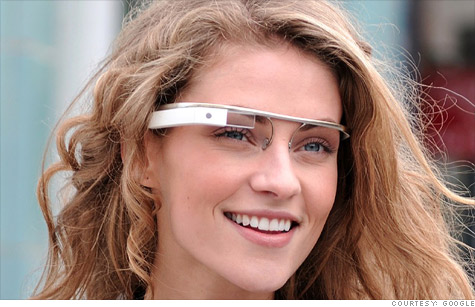
My Mind-reading machine would be miniscule and similar to an already-existing technology: Google Glass!

Except instead of taking up just the top left corner of a view, it would be more of an overlay on the entirety of the vision (glasses) - kind of a la the inside view of iron man. But with the display shrunk to just over the glasses!
This display would would be remote controlled with a smartphone-like object in our pockets with physical buttons and stuff. We could play games, record, do everything we can do today with a smartphone but with a little futuristic but simple 'remote control' and with the display directly flashed on the glasses. 

There would also be a detect conscious thought mode, where we trigger it and whoever we're looking at would have, in little words over their head, their conscious train of thought! 

I would use it for 1. making billions of dollars by selling my revolutionary technology, and 2. getting lots of mates through my newfound fame and riches and a thought-reader that can tell me when they're interested! 

Wednesday, September 12, 2012

Special Olympics

I've met a lot of people with mental disorders in the past few years. Unfortunately or fortunately, nearly all of them are protected by HIPPAA!


But at my high school, every year we volunteered for Special Olympics where we accompanied an autistic child. I did this three times and each year was different. My first year, I got a "runner." I assume these were the ADHD kids who couldn't sit (or stand) still and would just, out of nowhere, take off! We were warned about these "runners" during orientation but I didn't believe that they existed...until she just took off! She was around 8 years old and just kept running, everywhere! My out of shape self could not keep up - it was like a three hour game of tag!

My second year, I had a very introverted kid who had moved around jerkily. He was a little bit older and luckily, he did not run. Instead of doing the events though, he enjoyed the little 'dance center' the most. He spent the whole time in the dance center having fun, and it was a good time.

In the third year, I had a little boy who was very energetic. He seemed to have nothing wrong with him!

Tuesday, September 4, 2012

What do I find confusing about statistics, experiments, journal articles, and why?

The most confusing thing about journal articles are long convoluted paragraphs filled with strange details and methodologies. Paragraphs that are too long seem to automatically make my eyes glaze over until a few seconds later, voila! I'm at the next paragraph!


 Also things that I don't understand are confusing, of course! I specifically remember this one neuroscience article on OCD and deep-brain electrodes that was super confusing!
 
For statistics, although I've taken a statistics class I can only recall off the top of my head basic things like correlation coefficients, mean, mean, mode, regression, etc. Complex tests like ANOVA and other things I would need to spend a few minutes reviewing. Even more complex tests not covered in a introductory statistics course I just gloss over as, "Yeah, I hope they knew what they were doing!" Because I have no iea what this means!